Showing posts with label a quick history. Show all posts

Friday, March 20, 2015

A Quick History - Porsche

 Porsche History and Logo
Ferdinand Porsche began Porsche in German in 1931 as a motor vehicle development and consulting company. An early assignment came from the German Government, asking for a “car for the people”. The result was the Volkswagen Beetle. In 1939, the Porsche 64 was designed, using many components from the Beetle.
Porsche History 1939 Porsche 64
1939 Porsche 64
During World War II, Porsche designed heavy tanks but lost the contract to Henschel & Sons. The designs were instead used Elefant Tank Destroyer. Meanwhile, Volkswagen made military versions of the Beetle. The factory fell to the British and Ferdinand lost his position. Shortly afterward, he was arrested for war crimes but never actually tried.

His son, Ferry Porsche, built his own cars in an attempt to steer the company until his father's release from prison 20 months later. Many consider his design, the Porsche 356, the first Porsche since it was the first one that was actually sold by the company. During this time, parts were scarce in the post-war country and they were required to use many of the same parts used in the Beetle. However, over time, Porsche innovation began to replace the Volkswagen parts.
History Porsche 356
1955 Porsche 356
After racing success, the Porsche 911 was introduced in 1964, which is, by far, the most well known and iconic car Porsche has produced. The company actually originally planned to replace it in the 1970s with the 928 but obviously, that didn't work out very well.

1964 Porsche 911
1964 Porsche 911
In the 1990s and 2000s, they had an understanding with Toyota to learn their manufacturing techniques and hybrid technology. Porsche always had a close relationship with Volkswagen. In 2009, Volkswagen announced they were becoming an integrated automotive group with Porsche, under the name Volkswagen AG. By 2012, Volkswagen completely owned Porsche. 
Click to see our Porsche!
2008 Porsche Cayman
Sources: Wikipedia, http://en.wikipedia.org/wiki/Porsche; Good Logo, http://goodlogo.com/extended.info/porsche-logo-2645; Auto Concept Reviews, http://autoconcept-reviews.com/cars_reviews/porsche/porsche-type-60-k-10-berlin-rome-1939/cars_reviews-porsche-type-60-k-10-berlin-rome-1939.html; Top Car Rating, http://www.topcarrating.com/1964-porsche-911-2-0-coupe-901.php; Car Gurus, http://www.cargurus.com/Cars/1955-Porsche-356-Pictures-c7821

Friday, December 19, 2014

A Quick History - Suzuki


Suzuki is a transportation manufacturer in Japan known for their compact cars, 4x4's, motorcycles, ATVs, engines, and wheelchairs. They are the fourth largest car company in Japan and ninth in the world.
Michio Suzuki
The company got it's start as Suzuki Loom Works by Michio Suzuki. They built looms for Japan's huge silk industry. In 1929, he invented a new weaving machine which was exported around the world. Suzuki spent over thirty years focusing solely on looms and had over 120 patents and rights. Even though he was very successful, he realized he could grow the company if they branched out elsewhere.
Suzuki Loom Works

Customer demand at the time was for cars. He started new designs in 1937 and two years later, he had several prototypes. World War II put a hold on his plans though as the government deemed vehicles that weren't for the military, unnecessary. Suzuki went back to looms after the war. There had been a huge boost in the cotton market, as the United States government had approved cotton shipments to Japan. This did not last long though, as that market declined in 1951.
A Suzuki Loom
It was then he turned back to transportation. Post war Japan had a large demand for cars at this point. He designed a bicycle with a motor attached known as “Power Free”. It could run solely on the engine if the rider didn't wish to pedal. The Japanese government was so impressed, they gave him money to research motorcycles.
1954 Suzuki Colleda
By 1954, Suzuki was producing 6,000 motorcycles a month and he officially changed the company's name to Suzuki Motor Co. After months of success with the motorcycles, he turned to cars again and came out with a new one in 1955. They were immediately known for their innovation.

Suzuki would go on to become a successful car company and introduce new models throughout the years. Today, Volkswagen is their biggest shareholder.

2014 Suzuki SX4
Sources: Wikipedia, http://en.wikipedia.org/wiki/Suzuki; News Motorcycle, http://news-motorcycle.com/articles/6/19.html; Japan Coolture, http://www.japancoolture.com/it/dai_telai_per_il_cotone_ai_telai_da_corsa_suzuki; Auto Centre, http://www.autocentre.ua/ac/auto/authority/sotkannyy-uspekh-15930.html; Car and Driver, http://www.caranddriver.com/photo-gallery/2014-suzuki-sx4-suzuki-still-produces-autos-just-not-for-us-2013-geneva-auto-show;

Friday, December 12, 2014

A Quick History - Rolls-Royce

 Rolls Royce Logo
Henry Royce made his first car, the Royce 10, in 1904 in Britain. He was introduced to Charles Rolls shortly after. Rolls owned a car dealership named C.S. Rolls & Co and he was impressed with the design of the Royce 10. He agreed to sell the cars Royce could make and four models were designed under the name Rolls-Royce. The company became official in 1906.
1904 Royce 10
1904 Royce 10
After World War I, Rolls-Royce avoided attempts of merging with other car companies. In 1921, due to a high demand, they opened a factory in the United States. It was closed ten years later. During the Great Depression, they acquired Bentley, who was suffering financially.
1970 Rolls Royce
1970 Rolls-Royce
In 1971, Rolls-Royce Limited was nationalized due to its financial collapse. The British Government sold the car division two years later so the company could focus solely on jet engines. It was acquired by Vickers in 1980 and sold to Volkswagen in 1998 along with Bentley. However, while Volkswagen had rights to the grille and mascot, BMW had the right to the Roll-Royce name. Between 1998 and 2002, BMW supplied engines and allowed Volkswagen to use the name and logo.
1970 Rolls Royce
1970 Rolls-Royce
 We have a Rolls-Royce Ghost on the lot now! Click on the picture to see more about it. Test drives by appointment only
2012 Rolls-Royce Ghost
Click to see our 2012 Rolls-Royce Ghost
Sources: Wikpedia, http://en.wikipedia.org/wiki/Rolls-Royce_Limited; Speed Doctor, http://www.speeddoctor.net/2013/rolls-royce-10hp-1904-06/; Remarkable Cars, http://www.remarkablecars.com/main/rolls-royce/1970-rolls-royce.html; Fast Cars, http://fastcarsites.com/2002-rolls-royce/;

Friday, December 5, 2014

A Quick History - Audi

 Audi Logo
 Audi, a German company, has been owned by Volkswagen since 1966. The company's logo (four interlaced circles) is actually based on the four car companies that banded together in 1932.
August Horch
August Horch
August Horch founded A. Horch & Cie on November 14, 1899. However, he was forced out only a few years later after a dispute with his supervisory board. He went on to create Horch Automobil-Weke GmbH but was then told by a court he was banned from using the trade name Horch. He invited a few friends over to come up with a new name. One made the connection that Horch, which means “listen”, can be translated to “Audi” in Latin.
1910 Audi Type A
1910 Audi Type A
Horch left his new Audi company in 1920 for a position at the ministry of transport, but remained on the board. In 1932, Audi merged with Horch, DKW, and Wanderer to become Auto Union and the four ring logo was adopted.
Audi Zwickau
1929-1932 Audi Zwickau
The economic crisis in Germany prior to World War II though forced Audi to disappear from the new car market for more than 20 years. The plant was then used for military production and in 1949, the company restarted assembly of pre-war models in a damaged factory.

1970 Audi 100
1970 Audi 100
In 1958, the company was owned by Daimler-Benz and the Audi name was only used again on a new car in 1965. Volkswagen then completely owned the company in 1966 and has owned in since. In the 90s, Audi began to shift its market to compete with Mercedes-Benz and BMW. Today, sales continue to increase for the Audi company and reported record sales in 2011.
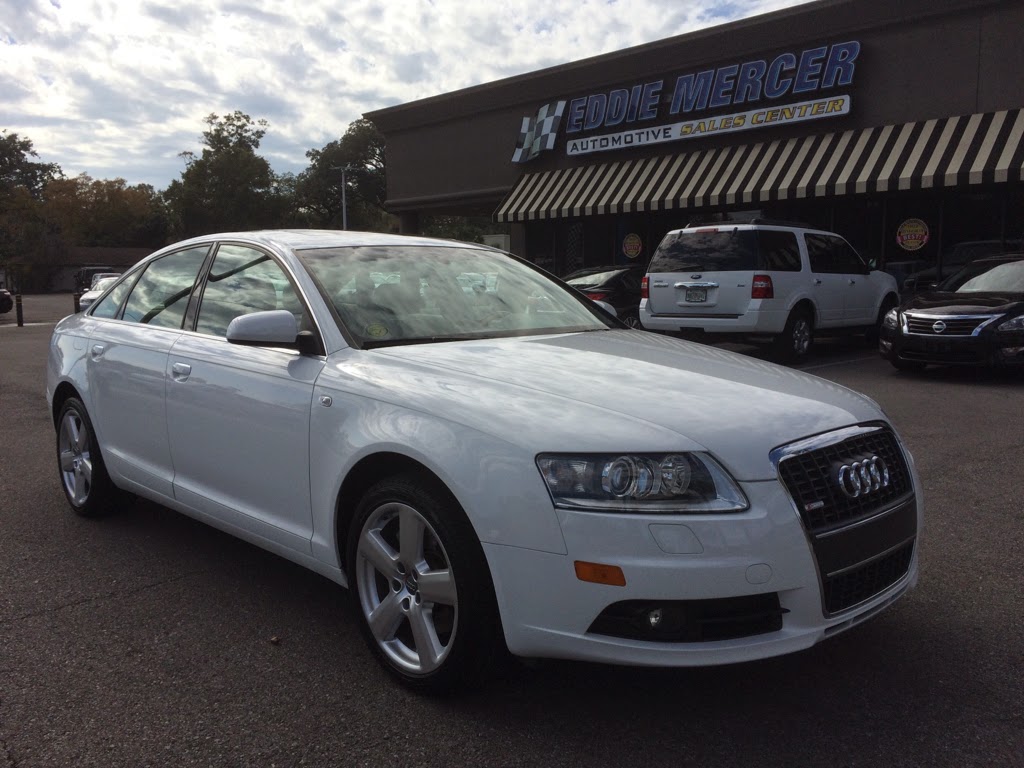
2008 Audi A6
Click to see our 2008 Audi A6!
Sources: Wikipedia, http://en.wikipedia.org/wiki/Audi; CarType, http://cartype.com/pages/189/audi; Classic Cars Today Online, http://www.classiccarstodayonline.com/2012/04/27/youre-an-audi-fan-then-you-should-know-about-the-ingolstadt-factory-museum/1910-audi-type-a-x/; Georg Sander Flickr, https://www.flickr.com/photos/geralds_1311/6214101101/; Mad 4 Wheels, http://www.mad4wheels.com/contents/model.asp?id_car=4115

Friday, November 21, 2014

A Quick History - Mercedes Benz Diamler Part 2

Read Part 1 Here!
1902 Mercedes Simplex
 Although Diamler died in 1900, Maybeck continued working with the company and designed the successful Mercedes model in 1902. Its popularity finally convinced the boards that automobiles are the way to go. Sales took off that year with the introduction of the Daimler-Mercedes and the company expanded. During World War I, they produced war supplies. They actually even opened a factory to solely build military vehicles, aircraft engines, and even entire aircraft.

Mercedes WW1 Car
Mercedes World War I Car
After the war, demand for vehicles dropped sharply due to the low demand and high taxes on luxury items throughout Germany. Benz approached DMG with the possibility of a merger in 1919. Diamler did not like the idea. However, the economy continued to collapse throughout the country and they agreed in 1924. It became official in 1926.
1926 Mercedes Roadster
The company became known as Diamler-Benz AG and the cars were named Mercedes-Benz, made to honor both sides of the company. During World War II Diamler-Benz made aircraft, tank, and submarine engines as well as parts for weapons. Like other companies within Germany, they employed slave labor to meet demands.
Mercedes L3000S
Mercedes L3000S - Used in World War II
In 1998, the company merged with Chrysler to become Daimler Chrysler AG. But throughout the next few years, Diamler would not allow Chrysler to continue development and maintain quality. Although they were still good vehicles, Chrysler was unable to stay on par with the competition. In the world economy crisis, Diamler cut ties with Chrysler and sold it to Cerberus Captial Management.
1998 Mercedes-Benz E320
1998 Mercedes-Benz E320 Wagon
The company today is known as Diamler AG. Mercedes-Benz is one of the oldest cars still produced today.
2013 Mercedes-Benz C250
Click to see our 2013 Mercedes-Benz C250
 Sources: Edmunds, http://www.edmunds.com/mercedes-benz/e-class/1998/; Oldtimer Picture Gallery, http://www.autogallery.org.ru/m/mbl3000s.htm; Missing Lynx, http://www.network54.com/Forum/282066/thread/1155266628/WWI+German+Staff+Cars; Motor Trend, http://wot.motortrend.com/benz-time-warp-5-picks-from-our-tour-of-the-mercedes-museum-351945.html/1902-mercedes-simplex-front-three-quarters/; Wikipedia, http://en.wikipedia.org/wiki/Mercedes-Benz

Friday, November 14, 2014

A Quick History - Mercedes Benz Diamler Part 1

Mercedes Benz
Mercedes-Benz is a well known car brand from Germany that features luxury vehicles, busses, trucks, and coaches. Mercedes-Benz has a long interesting history that begins with Benz & Cie and Diamler-Motoren-Gesellschaft (DMG). The car traces its roots back to the 1901 Mercedes and the 1886 Benz Patent Motorwagen.
Benz Patent Motorwagen
Benz Patent Motorwagen (1886-1888)
In 1883, Karl Benz founded Benz & Cie, which designed the Benz Patent Motorwagen in 1886. The vehicle was difficult to control and actually crashed into a wall during a demonstration! The Motorwagen was first sold in 1888, which makes it the first automobile available for purchase by the public.
Bertha Benz
Bertha Benz
Karl Benz
Karl Benz
The original version had no gears and couldn't climb hills alone. Benz's wife, Bertha, sought to fix these problems, and without telling her husband, took her two sons on a 66 mile road trip, known as the first ever long distance car trip. Along the way she fueled up, repaired technical and mechanical problems, and actually invented brake lining (she had a shoemaker nail leather on the brake blocks). She had left in the morning and they arrived that night. She stated that she wanted to demonstrate the automobile's travel ability and generate publicity. Today, the day is celebrated in Germany with an antique auto rally.

In 1893, Benz introduced the Victoria, a car suitable for mass production. The first truck in history came in 1895. In 1899, Benz was the largest automobile company in the world and remained so into the 1900s.
Mercedes Truck
1895 Truck
Elsewhere in Germany, in 1890, Gottlieb Daimler and Wilhelm Maybeck founded the Diamler-Motoren-Gesellschaft (DMG) as an engine business. Soon after opening, they became a public corporation due to low sales and profit. The founders often advocated for a concentration in car manufacturing, but the board brushed them aside. They left the business for a short time due to this.

Gottlieb Diambler
Gottlieb Daimler
Wilhelm Maybeck
Wilhelm Maybeck
DMG did make their first car in 1892 and was followed by two more models in the coming years. Diamler andMaybeck returned to the company in 1896 when the company started running into financial problem.

To be continued....
Click to see our Mercedes-Benz S-Class
2007 Mercedes-Benz S550 Sedan - For Sale in Pensacola

Sources: Wikipedia, http://en.wikipedia.org/wiki/Mercedes-Benz; MyAutoWorld, http://myautoworld.com/mercedes/history/company/people-daimler/people-daimler.html; English History Fiction Authors, http://englishhistoryauthors.blogspot.com/2012/07/mrs-benzs-wild-ride.html; Logo Design Love, http://www.logodesignlove.com/mercedes-benz-logo-evolution; Diamler, http://www.daimler.com/dccom/0-5-1322446-1-1323352-1-0-0-1322455-0-0-135-0-0-0-0-0-0-0-0.html

Friday, November 7, 2014

A Quick History - Lincoln

Lincoln Logo
Known as Ford's luxury brand, Lincoln was started by Henry Leland and his son Wilfred in 1917. Named for Abraham Lincoln, the vehicles actually have a long history of being used as Presidential vehicles. The last Lincoln used by a President was a 1989.
1917 Lincoln Model L
The original income for the Lincoln Motor Company was from assembling aircraft engines for World War I. The transition caused problems for the company. With financial issues and low production rates, the company was forced into bankruptcy in 1922. Ford purchased the company that year and it was quick to become one of the top selling luxury brands. In 1924, police forces began to use the large touring sedans.
1950s Lincoln Continental
More recently, Lincoln went on to beat Cadillac in sales in 1998 and 2000. However, sales decreased due to the decline of demand for the American car brand. 
1998 Lincoln Continental
Mercury was closed in 2010 and Ford announced plans to design new models for the Lincoln brand to help make up for this loss. They plan to have seven models for Lincoln by 2015 and also have a larger Chinese market by 2014.
Click to see our 2004 Lincoln Town Car!
2004 Lincoln Town Car - Click to see more!
 Sources: Wikpedia, http://en.wikipedia.org/wiki/Lincoln_Motor_Company; Concept Carz, http://www.conceptcarz.com/vehicle/z8865/Lincoln-Model-L.aspx; Anypopti, http://anypopti.blogspot.com/2013/02/lincoln-logo.html; TruckTough, http://www.trucktough.info/tag/1998-lincoln-cars; Swide, http://www.swide.com/sport-man/luxury-car/top-10-cars-of-the-1950s-from-fiat-500-to-cadillac-eldorado/2012/12/02

Wednesday, October 29, 2014

A Quick History - Nissan


Nissan logo
Nissan Logo
 Nissan is a car manufacturer in Japan and is currently the 6th largest in the world. Nissan was originally founded as Kwaishinsha Motor Car Works by Masujior Hashimoto in 1911. Throughout the years, it would undergo several name changes (including variations of the original name and of DAT) to reach the brand name of Nissan and underwent several merges to become the company it is today.

1914 DAT
1914 Nissan DAT
In 1914, their first car, DAT, was revealed. D.A.T were the last name initials of the original investors. DAT went on to build trucks and passenger cars. In 1931, the unveiled the smaller car known as Datson or “Son of DAT”. When Nissan took control, they changed the name to Datsun, as “son” can mean “loss” in Japanese. Nippon Sangyo was a holding company founded in 1928 and the abbreviation was Nissan. The name stuck and Nissan motor was founded in 1934.

Throughout World War II, Nissan built trucks, airplanes, and engines for the Japanese military. When the land the factory was on was captured, they moved the plant to China where they made machinery. This continued until the plant was captured by the Americans and Russians.

1958 Datsun 210
1958 Nissan Datsun 210
In 1950s, Nissan wanted to expand their market and they turned to the Datsun to do so. The smaller economy car would reach unmet demands in both Australia and United States. With improved designs, by the 70s, they became one of the largest car exporters in the world.

1960s Nissan Patrol
1960s Nissan Patrol
The 1973 oil crisis was actually a boom for Nissan as the demand for smaller, more fuel efficient cars rose dramatically. They actually had to build factories around the world to meet the demand. Throughout the last thirty years, Nissan continued to open several other plants in new countries.

They partnered with Ford in 1993 to 2002 and are currently in an alliance with Renault S.A of France.
Click to see our 2013 Nissan Pathfinder!
2013 Nissan Pathfinder - Click to see more!
Sources: Wikipedia, http://en.wikipedia.org/wiki/Nissan; California Streets, http://californiastreets.blogspot.com/2011/11/san-francisco-street-sighting-1967.html; Early Datsun, http://www.earlydatsun.com/datsun210.html; Zero to 60 Times, http://www.zeroto60times.com/blog/large-car-logos-2/large-nissan-car-logo/; Nissan Club, http://en.nissan-club.eu/gallery_detail.php?id=1486

Friday, October 24, 2014

A Quick History - Mitsubishi

Mitsubishi Logo
Mitsubishi Logo
Mitsubishi is the 6th largest car manufacturer in Japan and the 16th in the world. It is part of the Mitsubishi group, the largest industrial group in Japan.
1917 Mitsubishi Model A
The cars' origins date back to 1917, with the debut of the Model A. It was a hand built sedan considered expensive when compared to the mass produced competition. It was discontinued in 1921 when only twenty two had been built.

Several companies merged with Mitsubishi in the following years to make it the company it is today. In 1937, they developed a sedan for military use and aircraft throughout the war. Afterward, they returned to vehicles with buses, cargo vehicles, and a scooter.
1937 Mitsubishi PX33
Finally in the 1960s, Japan was ready for family driving, with the economy rising and wages increasing. Mitsubishi saw this and introduced the Mitsubishi 500 sedan, with several new designs in the next few years.
Mitsubishi 500
Mitsubishi 500
In 1971, the company forged alliance with Chrysler to sell in the United States under the Dodge name. Sales increased throughout Europe and annual production continued to increase throughout the next few years. By 1980, million cars were produced and in 1989, 1.5 million. But Chrysler was running into problems. Tensions had arose between the two companies as Chrysler felt Mitsubishi was in Chrysler's market.
1982 Mitsubishi Colt
In 1982, Mitsubishi sold under their name for the first time within the United States. Just over ten years later, Chrysler got rid of its shares in Mitsubishi and they currently only share by contract. In recent years, Mitsubishi has also had alliances with Volvo, Hyundai, Citroen, and others.
 
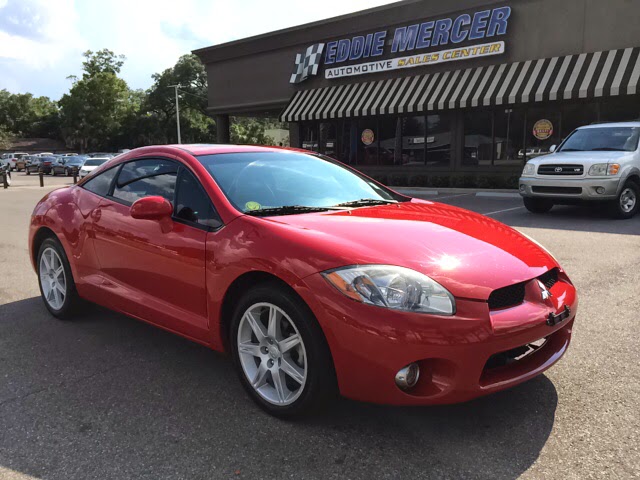
Click to see our 2006 Mitsubishi Eclipse!
Sources: Wikipedia, http://en.wikipedia.org/wiki/Mitsubishi; Car Domain, http://www.cardomain.com/ride/2488388/1982-mitsubishi-colt/; The Cars One, http://thecarsone.blogspot.com/2013/04/mitsubishi-logo.html; Japanese Nostalgic Car, http://japanesenostalgiccar.com/2009/10/26/one-more-from-tokyo-1917-mitsubishi-model-a/